Expert Answer
Why do I have hypothyroid symptoms with a normal TSH?
By Arun Agrahri Last reviewed 2 timecoded sources
Quick Answer
Sometimes a thyroid problem is being missed, and sometimes the symptoms come from something else. Hyman says thyroid problems go undiagnosed about half the time and wants free T3 and antibodies run. Attia agrees a normal TSH can hide a problem, but warns against treating a borderline free T3 or reverse T3 on its own.
What the Panel Says

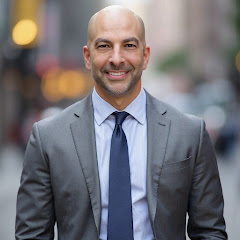
Says thyroid problems often go undetected and that mainstream doctors rarely run a full thyroid panel. He wants free T3 and thyroid antibodies measured beside TSH, and he is quick to diagnose on symptoms.
“in fact 50% of the time it's undiagnosed now conventional medicine doctors do not run a full thyroid panel”
Mark Hyman, on the record @ 18:22
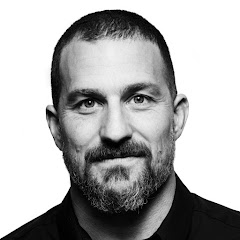
Says a normal TSH can sit beside real symptoms when reverse T3 runs high and T3 low. Doctors also dismiss positive antibodies when the TSH looks normal, he says. He also calls it overreach to treat a borderline free T3 or high reverse T3 whatever TSH and free T4 say.
“dismissing somebody with a patchy gland, positive antibodies, and a family history because their TSH is, you know, quote unquote normal at 4.2”
Peter Attia, on the record @ 09:40

How this moved
1 update since September 2026. Each one is a dated statement from a named expert, timecoded to the video.
-
Latest Peter Attia
Missed in both directions
In a preview of his thyroid AMA, Attia says thyroid care fails both ways. Some doctors dismiss positive antibodies because the TSH reads normal, and some clinicians treat a borderline free T3 or high reverse T3 whatever TSH says. Hyman's channel is the full panel side of that split.
on the record @ 09:34
Nobody has answered
Whether treating a normal TSH patient on free T3 or reverse T3 helps more than it harms. Hyman diagnoses on symptoms and a full panel. Attia has said T3 may suit patients who convert poorly, and now calls a borderline reverse T3 on its own overreach.
Detailed Answer
How a normal TSH can miss a problem
TSH, or thyroid stimulating hormone, is the brain's signal to the thyroid. Most screening checks it alone. Attia explained in an earlier episode that a normal TSH can sit beside real hypothyroid symptoms.
It happens when the body turns too much T4 into reverse T3, an inactive form, and too little into active T3 (05:52). For those patients, he said, giving T3 directly might make more sense (08:26).
Hyman says thyroid problems go undiagnosed about half the time and that mainstream doctors rarely run a full panel. He wants free T3 and thyroid antibodies checked beside TSH.
Why the panel doesn't treat every borderline result
In his 2026 thyroid AMA, Attia says care fails in both directions. Some doctors dismiss a patient with a patchy gland, positive antibodies and a family history because the TSH reads normal. Some functional medicine doctors do the opposite.
They treat a borderline free T3 or a high reverse T3 as proof, whatever TSH and free T4 say. Many mildly raised TSH results come back normal on a repeat test, he adds. And thyroid hormone is not harmless: it can cause an irregular heartbeat (atrial fibrillation) and bone loss.
Two of his guests lean toward the lab side. Antonio Bianco says the diagnosis rests on TSH and free T4. T3 plays no role, he says, because the body holds it steady while the gland starts to fail.
Nir Barzilai says many older adults carry a TSH of 5 to 8 that may be the body adapting rather than disease. He also notes the cutoff for calling it subclinical has moved from 10 to 7 to 5.
Other causes of the same symptoms
Fatigue and weight gain also come from poor sleep, anemia and perimenopause. That is why Attia puts labs ahead of symptoms. Huberman adds that about 20% of people with major depression have low thyroid hormone, so the overlap runs both ways.
What to ask your doctor
Both camps want more than a TSH before a decision. Hyman would add free T3 and antibodies. In an earlier AMA, Attia gave a range where he finds a slow thyroid hard to see, even with symptoms.
It is a TSH between about 0.5 and 2.0, free T3 above 3.0 and reverse T3 below 12. Because many mildly raised TSH results normalize, Attia points to a repeat test before anyone starts thyroid hormone.
Related Questions
Can you have hypothyroidism with a normal TSH?
Attia says one pattern allows it. High reverse T3 and low T3 can leave the TSH normal while symptoms persist. Hyman says thyroid problems go undiagnosed about half the time and wants a full panel.
What thyroid tests should I ask for besides TSH?
Hyman asks for free T3 and thyroid antibodies. Attia's guest Antonio Bianco says the diagnosis rests on TSH and free T4, and that T3 plays no role in making it.
Should a borderline TSH be treated?
Attia says many mildly raised TSH results come back normal on a repeat test, and that thyroid hormone can cause atrial fibrillation and bone loss. Barzilai says a TSH of 5 to 8 in older adults may be adaptation rather than disease.
More Questions About Thyroid & TSH
Precis Pro
Ask the experts anything
The answer above is the whole answer — every expert's position, where they disagree, and the timecode behind each one.
Pro adds
- Expert-by-expert breakdowns on any topic in the corpus
- Chat across 3,700+ expert videos
- A timestamp on every claim, so you can check it yourself
$9/mo · Cancel anytime