Consensus Report
Sleep Optimization
Universal Consensus
out of 5
Based on 42 episodes (68 hours analyzed) across the experts · Updated 2026-03-19
On the record
Checked against the tape: 2026-03-19
- 42 · 68 h
- episodes · hours
- 5 / 5
- experts on tape
- 28
- timecoded clips
- 8
- voices on tape
Voices: Andrew Huberman, Peter Attia, Rhonda Patrick, Bryan Johnson, Mark Hyman · guests Matthew Walker, Matt Walker, Dan Pardi
At a glance
Unlock with Pro ↓- Dose
- Form
- Timing
- Evidence
- Agreement
- 5 of 5 experts agree · 4 open disagreements
Expert Positions

The Verdict
All 5 experts treat sleep as the single most important pillar of health and longevity. Huberman provides the most actionable supplement and behavioral protocols, Attia and Walker quantify the disease risk of poor sleep, Johnson builds his entire life around sleep metrics, Patrick connects sleep to cellular repair and brain health, and Hyman addresses root-cause disruptors through a functional medicine lens.
Where They Disagree
Huberman provides specific supplement dosages and recommends the mag threonate + apigenin + theanine stack, while Attia and Walker emphasize that foundational sleep behaviors should come first and supplements are secondary.
Johnson advocates an 8:30 PM bedtime and building your entire social life around sleep, which is far more extreme than other experts who recommend consistency without such rigid scheduling.
+ 2 more disagreements in the full report
What the Tape Covers
28 clips across 21 videos
Where each expert stands on sleep optimization, and the moment on the tape that shows it. Every timecode opens the source video at that second — check any of them yourself.
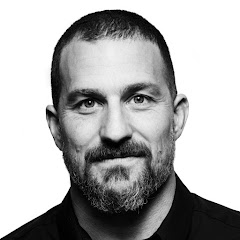
Huberman is the most prolific source on sleep optimization, with a dedicated six-episode guest series with Dr. Matt Walker, a standalone Sleep Toolkit episode, and multiple episodes covering circadian rhythms, jet lag, dreams, and the sleep-supplement connection. His Sleep Toolkit episode provides the most comprehensive behavioral and supplement protocol: morning sunlight within 30-60 minutes of waking, delaying caffeine 90-120 minutes, avoiding bright light after sunset, evening hot baths for core temperature drop, and the foundational sleep stack of magnesium threonate (145mg), apigenin (50mg), and theanine (100-400mg). He also covers NSDR (non-sleep deep rest) as a recovery tool, nasal breathing during sleep, and the temperature minimum concept for circadian clock shifting.
The reason that is is because there's a second force which is governing when you sleep and when you're awake, and that force is a so-called circadian force, circadian means about a day or about 24 hours, and inside all of us is a clock that exists in your brain and my brain, and the brain of every animal that we're aware of, that determines when we want to be sleepy and when we want to be awake. Just think about it, we don't go through the day wanting to fall asleep every 30 minutes and then feeling like we're wide awake, our sleep and our period of sleepiness tends to be condensed into one block,…
▶ 12:30 · Master Your Sleep & Be More Alert When Awake
5 more clips
- 56:30 · Sleep Toolkit: Tools for Optimizing Sleep & Sleep-Wake Timing | Huberman Lab Podcast #84 (Guest: Matthew Walker)
- 15:15 · Sleep Toolkit: Tools for Optimizing Sleep & Sleep-Wake Timing | Huberman Lab Podcast #84 (Guest: Matthew Walker)
- 29:00 · Master Your Sleep & Be More Alert When Awake
- 30:30 · The Science & Practice of Perfecting Your Sleep | Dr. Matt Walker (Guest: Matt Walker)
- 15:30 · How to Defeat Jet Lag, Shift Work & Sleeplessness | Huberman Lab Essentials
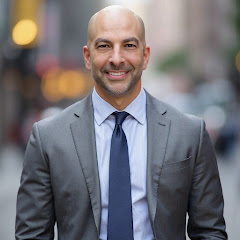
Attia has produced extensive sleep content in collaboration with Dr. Matt Walker, covering the links between sleep deprivation and Alzheimer's disease, cardiovascular disease, cancer, and metabolic dysfunction. He frames sleep as a 'superordinate node' — a master volume control that influences every other biological system simultaneously. Key data points include: daylight savings time showing a 24% increase in heart attacks with one hour of lost sleep, a 200-300% increase in coronary artery calcification risk with 5 hours or less of sleep, and a 70% drop in natural killer cell activity after one night of short sleep. He identifies three pillars of sleep regulation: adenosine levels, cortisol levels, and melatonin rise. He personally uses blue light blocking glasses, maintains consistent wake times, and monitors sleep quality with an Oura ring.
6 more clips
- 02:43 · The connection between sleep and Alzheimer's disease | Peter Attia, M.D. & Matt Walker, Ph.D. (Guest: Matt Walker)
- 03:50 · The connection between sleep and Alzheimer's disease | Peter Attia, M.D. & Matt Walker, Ph.D. (Guest: Matt Walker)
- 00:13 · The connection between heart disease & sleep deprivation | Peter Attia, M.D. & Matt Walker, Ph.D. (Guest: Matthew Walker)
- 01:51 · Fighting cancer and improving immune function with sleep | Peter Attia, M.D. & Matt Walker, Ph.D. (Guest: Matthew Walker)
- 00:37 · The impact of sleep on lifespan & healthspan | Peter Attia, M.D. & Matt Walker, Ph.D. (Guest: Matt Walker)
- 01:52 · 5 Tools for Managing Blood Glucose Numbers | Peter Attia, M.D.
Patrick connects sleep to cellular-level repair mechanisms and longevity pathways. She has a dedicated video on how heat therapy (sauna and hot baths) improves slow-wave sleep through ATP release, adenosine buildup, and somnogenic cytokine signaling. She explains that sauna use (20 minutes at 176F, 1-2 hours before bed) or hot baths (104F for 20-30 minutes) significantly increase growth hormone and prolactin — both linked to deep sleep regulation. In her discussions with Dan Pardi, she covers how melatonin regulates gene expression involved in metabolism and disease risk, and how sleep deprivation alters leptin and ghrelin hormones to increase hunger and reduce energy expenditure. She also connects sleep to the glymphatic system clearing beta-amyloid and to melatonin-mediated DNA repair.
…based on your diet and your lifestyle you may have someone who looks biologically younger even though their chronological age is older and the opposite is also true sleep also regulates TIR length people that sleep uh don't get enough sleep or have poor quality sleep have been shown to have shorter tiir which isn't a surprise because when you sleep is actually when you repair a lot of damage DNA repair enzymes get activated at night and also something called the glymphatic system gets activated when you're sleeping and this is really cool so when you sleep you've got cerebral spinal fluid that squirts up from your spine all the way to your…
▶ 18:30 · How Diet & Lifestyle Influence Aging & Brain Function
4 more clips
- 02:40 · How Heat Therapy Improves Slow Wave Sleep
- 01:39 · How Heat Therapy Improves Slow Wave Sleep
- 09:30 · Sleep, Daylight Anchoring, and Effects on Memory & Obesity with Dan Pardi (Guest: Dan Pardi)
- 16:30 · Sleep, Daylight Anchoring, and Effects on Memory & Obesity with Dan Pardi (Guest: Dan Pardi)
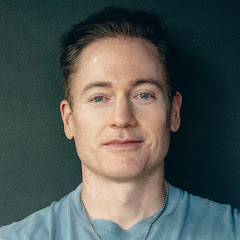
Johnson treats sleep as the single most important variable in his Blueprint longevity protocol. He goes to bed at 8:30 PM and wakes naturally at 5:00 AM, achieving over 2 hours of both REM and deep sleep with less than 30 minutes of nighttime wakefulness. He calls sleep 'the most powerful performance-enhancing drug available' and identifies as a 'professional sleeper.' His protocol includes: bedroom reserved strictly for sleep, air filtration, grounding sheets, 10,000 Lux light exposure within minutes of waking, last meal eaten early in the day, wind-down routine with no screens, stopping liquids around 4 PM, and monitoring resting heart rate as the strongest predictor of sleep quality. He has dedicated videos on fixing sleep, jet lag protocols, and bedroom optimization.
Fine. Fine. If if you realize sleep is the number one performance-enhancing drug. It's there's no more powerful drug in the world you can take on a daily basis. Then it's worth prioritizing your life around sleep. Hi everybody. This is the Don't Die Podcast with Brian Johnson. Today we're talking about sleep and how it is the number one best performance-enhancing drug in the world that you can take every single day. If you are struggling with sleep, we are going to try to condense the shortest and best list ever created to help you achieve high quality sleep every single day. Yeah. I think ironically we're talking about sleep today, are we not?
▶ 00:42 · My Advanced Guide To Better Sleep | Bryan Johnson Podcast
4 more clips
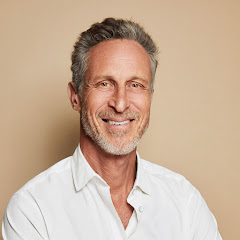
Hyman approaches sleep through a functional medicine lens, identifying hidden root causes of poor sleep that other experts do not address. He has a dedicated episode on 'The Real Reasons We Have Trouble Sleeping' covering gut health, heavy metal toxicity, thyroid dysfunction, blood sugar imbalances, and cortisol dysregulation as sleep disruptors. He emphasizes that 80-90% of serotonin is produced in the gut, which serves as a precursor to melatonin — making gut health essential for sleep. His personal protocol includes a strict 10 PM to 6-7 AM schedule, magnesium supplementation, eye shades, and earplugs. He recommends blue-blocking glasses, morning sunlight, avoiding stimulants after noon, and supplements including magnesium, glycine, and valerian root.
…so when you look I always prevalent like 70% of Americans have sleep issues right absolutely yeah so we have into our bodies are natural sleep-wake cycle and that natural sleep-wake cycle is part of how we are as animals so when you look at most animals you know what happens at night time the Sun Goes Down what do they do they go to sleep they're not on their iPads they're not on their iPhones they're not on their computer than on their television you know the light bulb and they're not raiding the refrigerator all right my cats running around at night looking for mice well if they're nocturnal right…
▶ 01:51 · The Real Reasons We Have Trouble Sleeping
5 more clips
Quoted passages are the automatic transcript from the second the link opens, with mis-transcribed terms corrected and nothing else changed. A quote appears only where the expert recorded alone and the passage is about sleep optimization — where someone else was in the room, you get the timecode without a quote, because the tape does not record who said which line.
About This Analysis
This consensus report on Sleep Optimization is based on 42 videos (68 hours analyzed) from five longevity experts: Andrew Huberman, Peter Attia, Rhonda Patrick, Bryan Johnson, and Mark Hyman. Each expert's position was independently analyzed from their published video content, including lectures, podcast episodes, and Q&A sessions with 640+ guests, 310+ of them scientists and physicians.
The full report includes 8 key findings, dosage and protocol details, expert deep dives with direct video citations and timestamps, risk considerations, and related supplement synergies.
Frequently Asked Questions
Does magnesium help you sleep?
Magnesium supports GABA activity and is a core part of Huberman's sleep stack — magnesium threonate crosses the blood-brain barrier, and Hyman and Patrick also point to magnesium for sleep quality. It's a supporting player, not a sedative.
How late can you drink caffeine before it hurts your sleep?
Caffeine has a half-life of about 5-6 hours, so an afternoon coffee can still disrupt deep sleep even if you fall asleep fine. Walker and Huberman advise cutting it off well before evening.
Does alcohol help or hurt sleep?
It hurts. Huberman says even one drink disrupts slow-wave and REM sleep. Attia finds two or more drinks raise his resting heart rate, suppress heart rate variability and compress REM. Either way, alcohol sedates rather than produces restorative sleep (Attia, Huberman, Hyman).
Can a sleep tracker make sleep worse?
It can. Fixating on sleep scores can cause orthosomnia — anxiety about your data that paradoxically worsens sleep. Wearables also estimate sleep stages only roughly, so trust long-term trends over nightly numbers (Walker/Huberman).
Is melatonin a good sleep aid?
Huberman and Walker generally prefer behavioral approaches over exogenous melatonin for healthy adults, noting over-the-counter melatonin is often dosed far above physiological levels and may have endocrine effects.
Common Questions
Related Reports
Unlock the Full Report
Get dosages, timing protocols, expert deep dives with video citations, and risks for Sleep Optimization.
Every recommendation traces back to a specific expert, video, and timestamp.
$9/month or $79/year · Cancel anytime